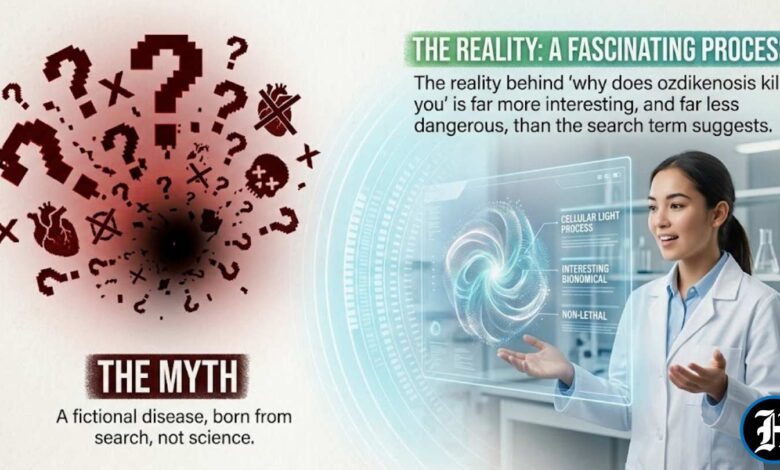
If you’ve recently typed “why does ozdikenosis kill you” into a search bar, you’re not alone. This unusual phrase has been circulating across social media feeds, comment sections, and curiosity-driven search queries, leaving thousands of users wondering whether they’ve stumbled upon a hidden, deadly disease that mainstream medicine somehow missed. The word itself sounds clinical, alarming, and just unfamiliar enough to feel like it could be real.
But before you spiral into worry or close the browser convinced you’ve discovered a rare killer illness, take a breath. The reality behind “why does ozdikenosis kill you” is far more interesting, and far less dangerous, than the search term suggests. This article will walk you through what’s actually happening when terms like this go viral, why your brain reacts the way it does, and how to protect yourself from the genuine harm that misinformation can cause, even when the disease itself isn’t real.
What Is Ozdikenosis? Breaking Down the Mystery Term
Let’s start with the most direct answer possible: ozdikenosis is not a recognized medical condition. You won’t find it in the International Classification of Diseases (ICD), in major medical journals, in clinical handbooks used by doctors, or in any peer-reviewed research database. The term doesn’t appear in established sources like the Mayo Clinic, Johns Hopkins, the World Health Organization, or the Centers for Disease Control and Prevention.
So where did it come from? Most likely, ozdikenosis emerged from one of three places: a fictional context such as a story, video game, or creative writing piece; an invented term used in online content designed to generate clicks; or a misspelling or mistranslation that took on a life of its own. Whatever the origin, the term has spread because it sounds plausible. It has the suffix “-osis,” which appears in many real medical conditions like tuberculosis, psoriasis, and scoliosis. That linguistic familiarity tricks the brain into accepting it as legitimate.
Why Made-Up Medical Words Feel So Real
Human brains are pattern-matching machines. When we encounter a new word that follows the structure of words we already know, we automatically assume it belongs to the same category. “Ozdikenosis” mimics the format of medical terminology so well that it slips past our usual skepticism filters. This is the same reason fake scientific studies often go viral. They use the language of science even when the substance isn’t there.
This phenomenon has a name in cognitive psychology: the illusory truth effect. When something sounds familiar, even if it’s completely fabricated, we’re more likely to accept it as true. Repetition strengthens this effect, which is why a strange term can feel more “real” the more you see it shared.
The Anatomy of a Viral Health Scare
To truly understand why “why does ozdikenosis kill you” became a search trend, you have to understand how viral health misinformation operates. It’s not random. It follows a predictable formula that exploits very specific human instincts.
The Fear-Curiosity Loop
When you see a phrase that combines an unfamiliar medical term with the word “kill,” your brain enters what researchers call a fear-curiosity loop. You feel a small surge of anxiety, which immediately triggers curiosity to resolve the threat. The fastest way to resolve it? Search the term. Read about it. Try to figure out if you’re in danger.
This loop is incredibly powerful. It’s the same psychological mechanism that drives people to check their symptoms on Google at 2 AM, even when they know it will only make their anxiety worse. The brain wants closure, and a search bar offers the illusion of it.
Why Engagement Algorithms Amplify Fear
Social media platforms are built to surface content that keeps people engaged. Unfortunately, fear is one of the most engaging emotions humans experience. Content that makes people feel scared, shocked, or uncertain tends to generate more clicks, comments, and shares than calm, balanced information. This means that even when a term like ozdikenosis has no medical basis, the dramatic framing around it gets amplified faster than corrections or fact-checks ever could.
A Quick Look at How “Ozdikenosis” Compares to Real Medical Terminology
To make this clearer, here’s a side-by-side breakdown of how the made-up term ozdikenosis stacks up against actual medical conditions that share similar-sounding suffixes.
| Term | Status | Recognized By | Verified Symptoms | Treatment Protocols |
|---|---|---|---|---|
| Tuberculosis | Real disease | WHO, CDC, all medical bodies | Yes, well-documented | Yes, established |
| Endometriosis | Real disease | All major medical organizations | Yes, well-documented | Yes, established |
| Scoliosis | Real condition | All major medical organizations | Yes, well-documented | Yes, established |
| Psoriasis | Real condition | All major medical organizations | Yes, well-documented | Yes, established |
| Ozdikenosis | Not recognized | No medical body | None documented | None exist |
This table makes the contrast obvious. Real medical conditions have institutional recognition, documented symptoms, and treatment protocols. Ozdikenosis has none of these markers. That’s the clearest sign that the term doesn’t represent an actual illness.
Why Does Ozdikenosis Kill You? The Honest Answer
Here’s the truth that the viral phrase doesn’t want you to hear: ozdikenosis cannot kill you because it does not exist as a recognized disease. A condition that has no biological basis, no documented symptoms, and no presence in medical literature cannot literally cause death.
But that doesn’t mean the search itself is harmless. The real danger isn’t ozdikenosis. The real danger is what happens when people trust unverified health information, and there’s a lot to unpack there.
The Hidden Cost of Misinformation
When someone genuinely believes they might be suffering from a rare, fatal disease they read about online, several harmful things can happen:
They may delay seeking care for the actual symptoms they’re experiencing. If your real problem is high blood pressure, but you’re convinced you have a fictional disease, you might miss the window for early intervention on something that’s genuinely treatable.
They may self-medicate based on advice tied to the fake condition. Online articles about made-up diseases often promote unverified supplements, alternative treatments, or “cures” that can interact with real medications or cause genuine harm.
They may experience significant mental health consequences. Health anxiety is a recognized psychological condition, and viral misinformation feeds it directly. People can develop sleep disorders, panic attacks, and chronic stress just from reading too much frightening content online.
They may pass the misinformation along. Every share, every comment, every conversation about a fake disease helps the term spread further, putting more people at risk of the same cycle.
How Real Diseases Actually Become Fatal
If you came to this article genuinely worried about deadly illnesses, it’s worth understanding what actually makes a disease life-threatening. This knowledge can help you focus on legitimate health concerns rather than viral phrases.
The Major Pathways to Severe Illness
Most fatal diseases harm the body through one or more of these mechanisms:
Organ failure. Conditions that progressively damage essential organs like the heart, lungs, kidneys, or liver can become deadly when those organs can no longer function. Examples include congestive heart failure, advanced kidney disease, and cirrhosis.
Severe infections. Bacterial, viral, fungal, or parasitic infections can become fatal when they overwhelm the immune system or trigger sepsis, a life-threatening response to infection.
Metabolic disruption. Diseases that interfere with the body’s ability to regulate blood sugar, electrolytes, or other vital chemistry can lead to coma or death if untreated. Diabetic ketoacidosis is one example.
Cardiovascular events. Heart attacks, strokes, and pulmonary embolisms cause death by disrupting blood flow to vital organs, often within minutes.
Cancer progression. Malignant tumors can become fatal by spreading to vital organs, blocking essential functions, or weakening the body until it can no longer sustain itself.
Trauma and acute injuries. Severe physical injuries, poisoning, or extreme allergic reactions can cause death rapidly without medical intervention.
Notice that all of these have one thing in common: they are documented, studied, and treatable when caught in time. Ozdikenosis fits none of these patterns because there’s no biological basis for it to fit any pattern at all.
Warning Signs You Should Actually Take Seriously
Instead of worrying about a phantom illness, here are the genuine red-flag symptoms that warrant immediate medical attention. If you’re searching strange terms because you don’t feel well, focus on these instead.
When to Seek Emergency Care Immediately
Sudden, severe chest pain or pressure Difficulty breathing or shortness of breath at rest Sudden weakness or numbness, especially on one side of the body Slurred speech or confusion that comes on suddenly Severe headache unlike any you’ve had before Loss of consciousness or fainting Persistent high fever above 103°F (39.4°C) Severe abdominal pain Coughing up blood or blood in vomit/stool Signs of severe allergic reaction, including swelling of the face or throat
These are symptoms that real medicine takes seriously. Any of them justifies an emergency room visit or a call to emergency services. None of them are tied to ozdikenosis because, again, that condition isn’t real, but they could easily be tied to conditions that are.
The Psychology Behind Searching Scary Health Terms
There’s a reason you clicked on this article, and it’s worth examining honestly. Most people who search for terms like “why does ozdikenosis kill you” fall into one of several categories.
The Curious Browser
You saw the term somewhere, didn’t recognize it, and wanted to know what it meant. Curiosity is healthy, and asking questions is how we learn. The key is making sure your curiosity leads you to verified sources rather than to deeper rabbit holes of misinformation.
The Health-Anxious Searcher
You’re already worried about your health, and any new scary-sounding term feels like it might apply to you. This is sometimes called cyberchondria, and it affects millions of people. If this describes you, the most helpful thing isn’t more searching. It’s talking to a real healthcare provider who can address your concerns directly.
The Fact-Checker
You suspected the term was made up and wanted confirmation. Good instinct. The world needs more skeptical readers, and you’re contributing to a healthier information ecosystem just by questioning what you see.
The Researcher
You’re studying misinformation, content trends, or digital health literacy. Understanding how phrases like this spread is genuinely important work, and articles like this one are part of that conversation.
Whichever category you fall into, recognizing your own motivation helps you process what you’re reading more clearly.
Red Flags That a Health Term Might Be Fake
Since the internet will keep generating strange health terms, it’s worth knowing how to spot misinformation quickly. Here’s a practical checklist you can use the next time you encounter a suspicious medical word.
Quick Misinformation Detection Checklist
The term doesn’t appear on any major medical institution’s website. If you can’t find it on Mayo Clinic, Cleveland Clinic, NHS, WHO, or CDC, that’s a major warning sign.
The term only shows up on small blogs, social media posts, or content farms. Real medical conditions are documented across multiple authoritative sources.
Articles about the term focus heavily on fear and death rather than on diagnosis, treatment, and recovery. Real medical content tends to be balanced and informational.
There are no peer-reviewed studies referenced. Legitimate diseases have research behind them.
The term has appeared suddenly and seems to be everywhere at once. Viral misinformation often spreads in waves, while real medical knowledge accumulates gradually over years.
The articles use vague language about symptoms and avoid specifics. Real medical content describes precise mechanisms, percentages, demographics, and treatment outcomes.
If a term checks more than two of these boxes, it’s almost certainly not a real disease.
How to Handle Health Anxiety in the Age of Viral Searches
If reading about ozdikenosis or similar terms has left you feeling anxious, you’re not weak or overreacting. Health anxiety is incredibly common, and the modern internet is essentially designed to trigger it. Here are some practical ways to manage it.
Practical Steps for Managing Health-Related Worry
Limit your search time. Set a clear boundary, such as no more than 10 minutes of health-related searching per day. Going beyond this rarely produces helpful answers and almost always increases anxiety.
Stick to authoritative sources. Bookmark trusted medical websites and use only those when you need information. Avoid random blogs, viral social media posts, and clickbait articles.
Talk to a real human. Schedule an appointment with a doctor, nurse, or therapist. Real conversations with qualified professionals are exponentially more reassuring than search results.
Practice the 24-hour rule. If you’re convinced you have a serious illness based on something you read online, give yourself 24 hours before acting on that belief. Most health anxiety spikes pass within a day if you don’t feed them with more searching.
Recognize the pattern. If you find yourself searching scary health terms repeatedly, that’s a sign the searches themselves are becoming the problem, not the solution. A mental health professional can help break this cycle.
Why Articles About Fake Diseases Keep Appearing
You might wonder why content about made-up conditions even exists in the first place. The answer is unfortunately simple: attention is profitable. Websites that publish dramatic, fear-driven content about mysterious diseases often earn money through advertising, affiliate links, or by funneling traffic toward unrelated products and services.
This isn’t a conspiracy theory. It’s just how the modern attention economy works. Fear-driven content performs well, so more of it gets created. The cycle continues until enough readers learn to recognize the pattern and stop engaging with it. That’s where you come in. Every time someone closes a clickbait article, leaves a fact-checking comment, or shares verified information instead of viral fear, the ecosystem gets a little healthier.
What to Do If You Encounter a Suspicious Health Term
The next time you see a phrase like “why does ozdikenosis kill you” pop up in your feed, here’s a simple action plan you can follow.
First, don’t panic. The dramatic framing is part of the design. Take a breath before clicking.
Second, search the term on a trusted medical website rather than a general search engine. If it doesn’t exist there, that tells you almost everything you need to know.
Third, check whether the original source cites any peer-reviewed studies, government health agencies, or recognized medical professionals. If the only sources are other blogs and social media posts, the term is almost certainly not legitimate.
Fourth, if you’re genuinely experiencing symptoms that worry you, contact a healthcare provider. A real consultation will always serve you better than online speculation.
Fifth, consider whether to share the term at all. Even sharing it to debunk it can sometimes amplify it further. Sometimes the most powerful response is simply not engaging.
Frequently Asked Questions About Ozdikenosis
Is ozdikenosis a real medical condition? No. Ozdikenosis is not recognized by any major medical organization, peer-reviewed journal, or clinical reference. It does not appear to be a real disease.
Why does ozdikenosis kill you, according to articles online? Articles claiming ozdikenosis is fatal typically rely on dramatic, vague descriptions rather than verified medical evidence. Since the condition itself isn’t documented in legitimate medical sources, any claims about how it causes death are not credible.
Could ozdikenosis be a rare disease that’s just not well known? Even rare diseases appear in medical literature. Conditions affecting just a handful of people globally still have documentation in databases like Orphanet or the National Organization for Rare Disorders. The complete absence of ozdikenosis from such resources strongly suggests it isn’t a real condition.
Why do people keep searching for ozdikenosis if it’s not real? Viral misinformation spreads through curiosity and fear. Once a term appears in social media or blog content, it generates searches, which generate more content, which generates more searches. The cycle continues regardless of whether the underlying claim is true.
Should I be worried if I have symptoms similar to what’s described in ozdikenosis articles? You should always take real symptoms seriously, but the right response is to consult a healthcare provider, not to self-diagnose based on a fictional disease. A doctor can evaluate your actual symptoms and identify any real conditions that need attention.
How can I tell if a health term I see online is legitimate? Check whether it appears on major medical institution websites, whether peer-reviewed studies exist, and whether multiple authoritative sources discuss it. If it only appears on small blogs and viral posts, treat it with skepticism.
Final Thoughts: The Real Lesson Behind “Why Does Ozdikenosis Kill You”
The search query “why does ozdikenosis kill you” tells us something important, not about disease, but about how we engage with health information in the digital age. We live in a time when frightening claims can travel faster than facts, when fear can feel more compelling than evidence, and when a few well-chosen syllables can convince thousands of people that an invented condition might be threatening their lives.
The good news is that you have more power in this situation than you might think. By questioning suspicious terms, sticking to trusted sources, and prioritizing real medical advice over viral content, you protect yourself from the actual harm misinformation can cause. The condition called ozdikenosis may not be real, but the lesson it teaches is: in matters of health, skepticism isn’t cynicism. It’s self-defense.
Your body and mind deserve better than panic-driven searches. They deserve verified information, qualified care, and the kind of peace that comes from knowing the difference between a real threat and a viral illusion. The next time a strange term shows up promising to terrify you, remember that the most powerful response is often the simplest one: pause, verify, and trust real medicine over internet noise.
Stay curious, stay skeptical, and stay well.
For More Update and Stories Visit: Hollywood Times